 Westside Mogul Resin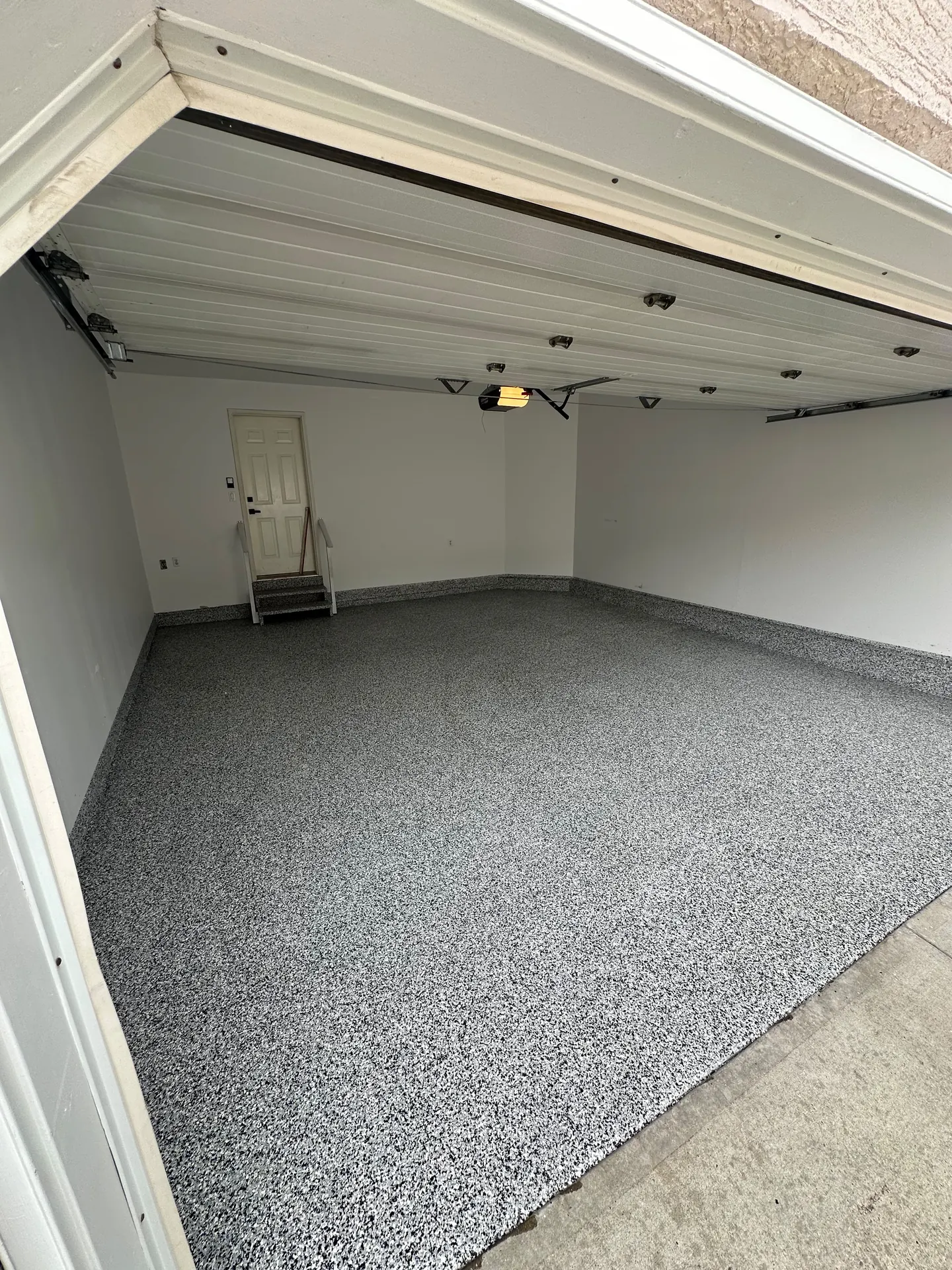
Choose flake for garages, basements and shops where you want a decorative, slip-resistant floor at great value. Choose quartz for kitchens, washrooms, clinics and wet commercial areas where you need a very hard, hygienic, textured surface. Both are broadcast systems built on an epoxy base, and both are far tougher than paint or a DIY kit.
Here is how the two compare in detail, so you can pick the right one for your space.
What Is a Flake Floor?
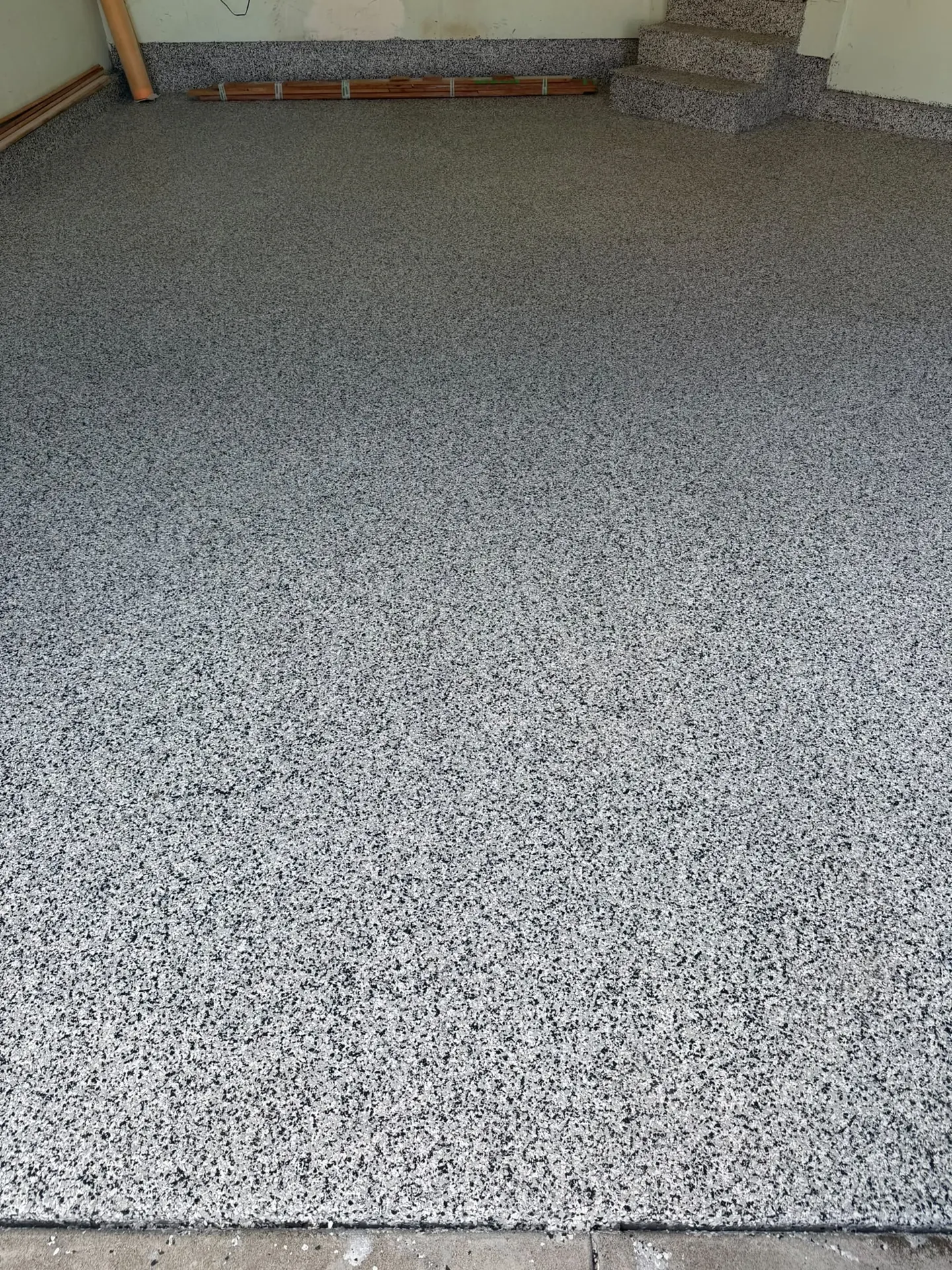
A flake floor, also called a chip or broadcast floor, starts with a ground slab and a coloured epoxy base coat. While the base is wet, vinyl flakes are broadcast across the floor until it is fully covered. The excess is scraped and vacuumed, then the floor is sealed with a clear topcoat, usually polyaspartic.
- Hides dust, scuffs and tire marks between cleanings.
- Adds texture and grip underfoot.
- Comes in many colour blends to match siding, cabinetry or brand colours.
- The most popular garage system in Calgary.
What Is a Quartz Floor?
A quartz floor uses coloured quartz sand instead of vinyl flake. The sand is broadcast into the epoxy in one or more layers, then sealed with clear coats. The result is a dense, very hard surface with a sandpaper-like texture that you can tune from light to aggressive grip.
- Very high impact and abrasion resistance.
- Excellent grip in wet areas.
- Seamless and easy to sanitise, which suits food and health spaces.
- Can be coved up the walls for a washable edge.
Side by Side
- Look: flake is a speckled terrazzo-style finish. Quartz is a fine, granular, stone-like finish.
- Texture: flake is lightly textured. Quartz can be built from subtle to heavy grip.
- Durability: both are tough. Quartz is thicker and harder, suited to heavy traffic and carts.
- Best for: flake suits garages, basements, laundry rooms and shops. Quartz suits commercial kitchens, washrooms, change rooms, clinics and ramps.
- Cost: flake is usually the better value. Quartz costs more because it uses more material and more coats.
Which Is Right for a Garage?
For most Calgary garages, flake wins. It handles road salt and hot tires when installed over a properly ground slab, it is easy to clean, and it hides the grit that winter drags in. Quartz is an option for heavy-use shops or where you want maximum grip on a sloped floor. Read our guide to epoxy garage floors in Calgary winters for more.
Which Is Right for a Basement or Wet Area?
Basements can go either way. Flake gives a warm, decorative look for rec rooms and gyms. Quartz is the better call for basement washrooms, laundry rooms and anywhere water is regular. For showers, commercial kitchens and change rooms, quartz with a cove base is the standard.
Colour and Design Choices
Flake blends range from subtle greys and tans that hide dust to bold mixes with black, white and accent colours. A common choice in Calgary garages is a grey or granite blend that hides salt residue and tire marks. Quartz comes in fewer blends but can be mixed for a custom look, and it pairs well with a solid colour cove base or safety lines in commercial spaces. Bring a photo of your siding, cabinets or brand colours and we will match a blend to it.
Partial and Full Broadcast
Flake can be broadcast lightly for a speckled look over a solid base, or fully to rejection so the base colour is completely covered. Full broadcast gives more texture, more durability and better dirt hiding, which is why it is the standard for garages. Quartz is almost always fully broadcast because the build is what gives it strength.
How Each System Is Installed
The first steps are the same for both: diamond grinding to open the concrete, crack and spall repair, then vacuuming until the surface is dust free. From there the two systems split.
- Flake: a tinted epoxy base coat goes down, vinyl flakes are broadcast by hand until the floor is fully covered, the excess is scraped and vacuumed, and a clear polyaspartic topcoat seals it.
- Quartz: an epoxy body coat goes down, coloured quartz is broadcast into it, the excess is removed, and the process is often repeated for a second layer before clear grout and topcoats are applied.
Because quartz is built in more layers, it takes a little longer and uses more material. That extra build is what gives it the hardness and texture wet commercial spaces need.
Maintenance
Both floors are easy to live with. Sweep or dust mop to remove grit, then wash with warm water and a pH-neutral cleaner. Flake floors hide dirt between washes. Quartz floors with heavier texture may need a deck brush or auto-scrubber in commercial kitchens to reach into the texture. Neither needs waxing.
What About Grip?
Both systems can be made more slip-resistant. On flake, a grit additive can be mixed into the topcoat. On quartz, the texture is controlled by how many broadcast layers are sealed and how thick the final coat is. Tell your installer how the floor will be used, including pets, bare feet and wet boots, so they can set the right texture.
Quick Decision Guide
- Working garage, basement or shop: flake.
- Wet area, commercial kitchen or washroom: quartz.
- Want a statement look instead: consider metallic epoxy.
- Still unsure: send photos and we will recommend one.
See both systems on our services page and real floors in our gallery.
Free Quote
Get A Fixed-Price Quote In 24 Hours
Send a few photos and rough dimensions. Denzille replies with a written quote, with the prep and system spelled out.
Frequently Asked Questions
What is the difference between flake and quartz epoxy?
Flake floors use vinyl chips broadcast into an epoxy base for a speckled, decorative finish. Quartz floors use coloured quartz sand for a harder, more textured, stone-like surface.
Which is better for a garage, flake or quartz?
Flake is the better fit for most garages. It is great value, hides dirt and tire marks, and handles road salt and hot tires when installed over a properly ground slab.
Is quartz flooring slip-resistant?
Yes. The quartz texture provides strong grip, and the level of texture can be adjusted, which is why quartz is common in wet commercial spaces.
Can a flake floor be made less slippery?
Yes. A grit additive can be mixed into the clear topcoat to add traction without changing the look much.