 Westside Mogul Resin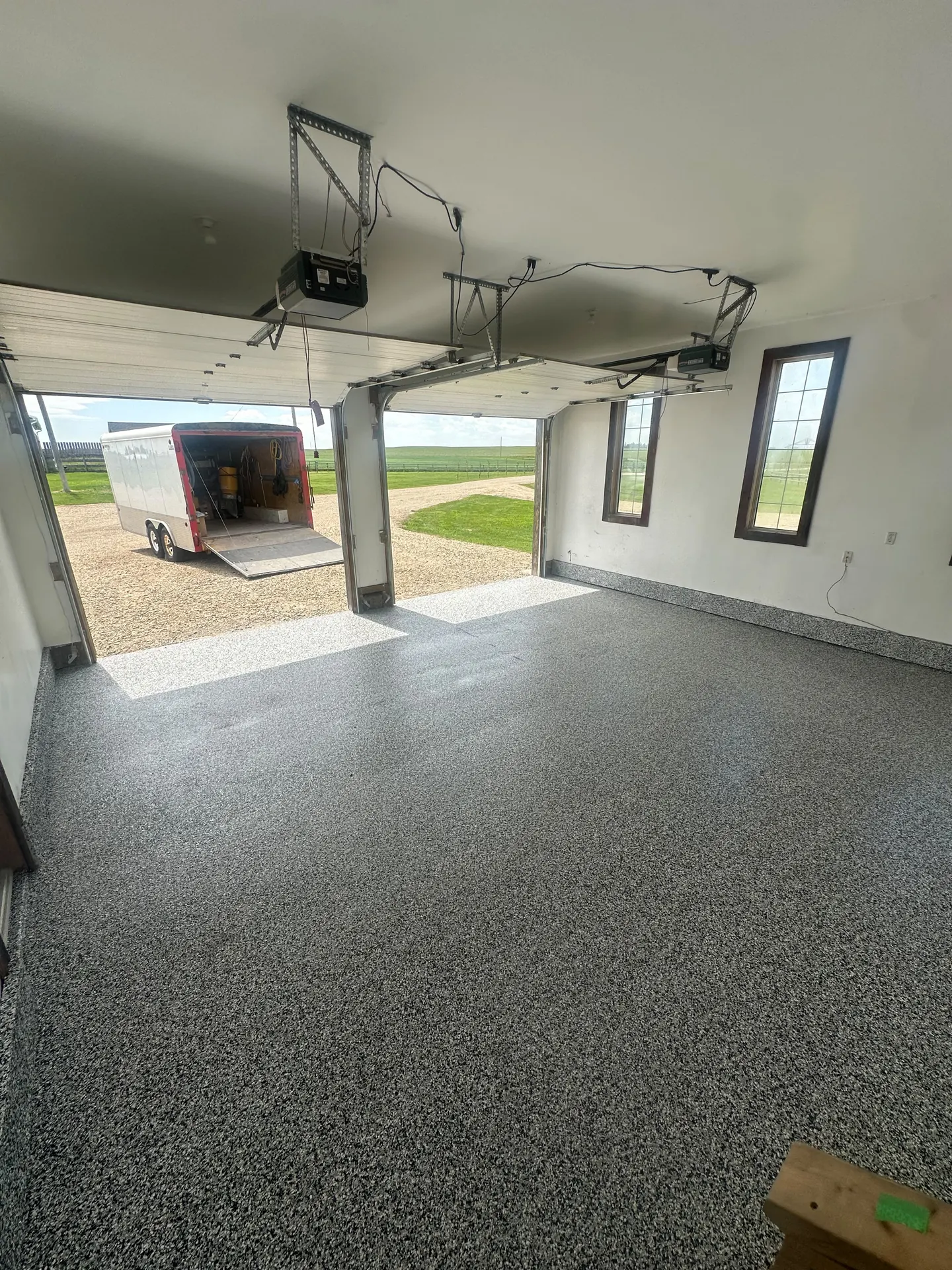
Calgary is hard on garage floors. Snow and slush come in on the tires, road salt and de-icer soak into the concrete, and chinooks swing the temperature from deep freeze to thaw in a day. Bare concrete absorbs all of it, which is why so many garage slabs in the city are pitted, flaking and stained by their tenth winter. A properly installed epoxy system seals the surface so that water, salt and oil stay on top where you can squeegee them away.
This guide covers what winter does to concrete, how an epoxy garage floor protects it, and how to plan an install around Calgary’s seasons.
What Winter Does to Bare Concrete
Concrete is porous. Meltwater carries dissolved salt into the pores, and when the temperature drops, that water freezes and expands. Repeat that cycle through a Calgary winter and the top layer of the slab starts to break away. This is called spalling, and it shows up as rough, pitted patches, usually where the car parks and near the overhead door.
- Salt and de-icer: chlorides attack the surface paste and can reach the reinforcing steel over time.
- Freeze-thaw cycles: water in the pores expands as it freezes and breaks the surface apart.
- Standing slush: meltwater pools in low spots and soaks in for days.
- Oil and fluids: winter driving means more drips, and bare concrete stains permanently.
How an Epoxy Floor Protects Your Garage
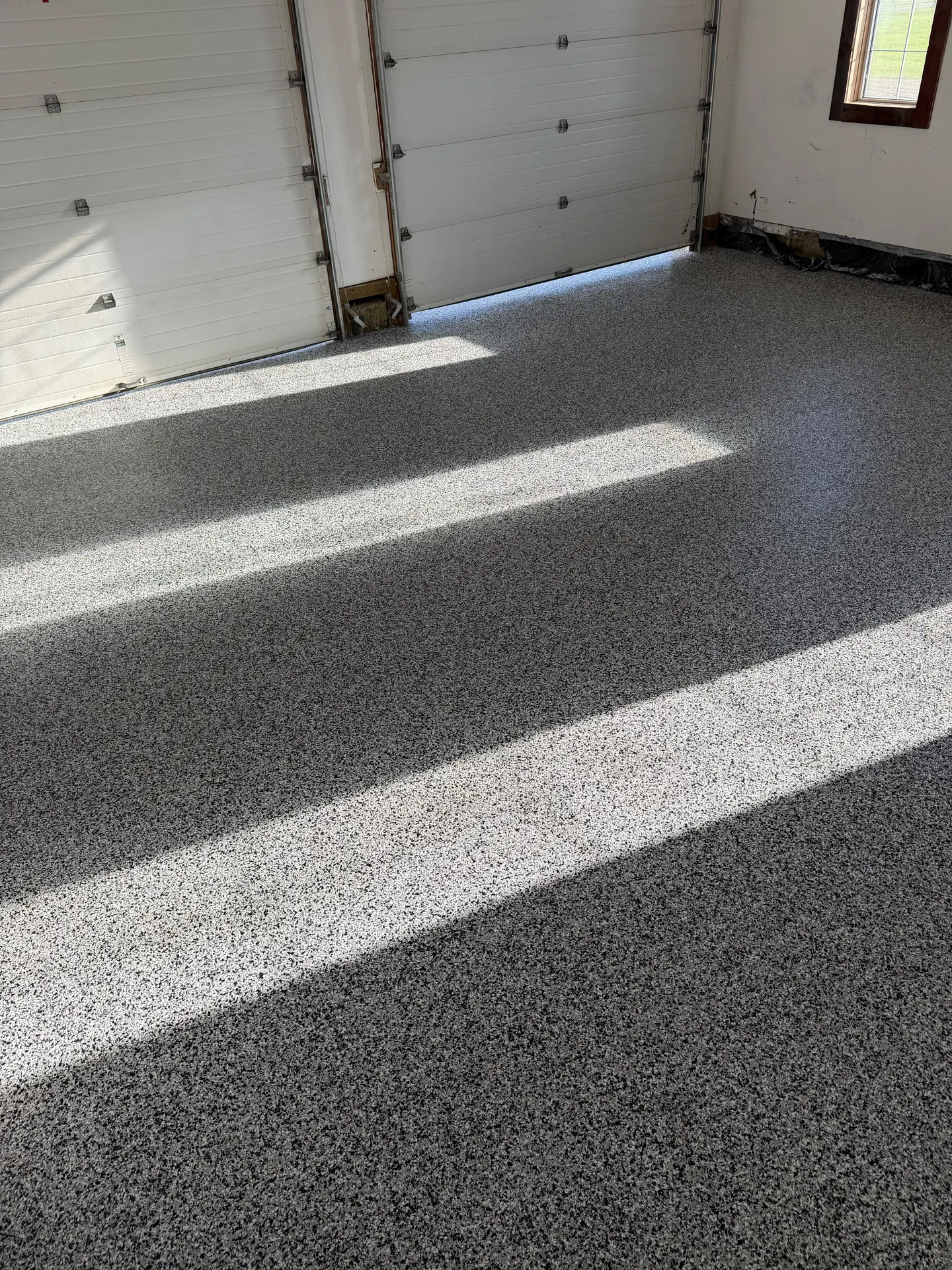
A coating system seals the pores so water and salt cannot get in. The floor becomes a non-absorbent surface you can rinse, squeegee and mop. With a flake broadcast and polyaspartic topcoat, it also resists hot tire pickup, which happens when warm tires soften a weak coating and pull it off the floor.
- Salt and slush sit on top instead of soaking in.
- Oil and fluids wipe up instead of staining.
- Flake texture adds grip on wet floors.
- A brighter floor makes a dark garage easier to work in during short winter days.
The System That Holds Up in Calgary
For most Calgary garages we recommend a full-broadcast flake floor: diamond grinding, crack repair, an epoxy base coat, vinyl flake broadcast to rejection, and a clear polyaspartic topcoat. The flake hides salt residue and tire marks between cleanings, and the topcoat handles abrasion from grit and studded tires.
If your slab already has spalling, the damaged areas are ground back to sound concrete and patched before coating. You can see an acreage garage done this way, before and after, in our job gallery.
Can You Install Epoxy in Winter?
Yes, with the right conditions. Coatings need the slab and air above a minimum temperature to cure properly, and the space needs to stay there through the cure. A heated or insulated garage can be done in winter with temporary heat. An unheated garage is best scheduled for spring through fall. We check slab temperature and moisture before any coating goes down, and we will tell you straight if waiting a few weeks gives you a better floor.
Winter Care for an Epoxy Garage Floor
- Squeegee meltwater toward the door or drain after big snow days.
- Rinse salt residue every few weeks through winter with warm water and a mild cleaner.
- Use a walk-off mat at the house door to trap grit.
- Avoid harsh acids or solvent cleaners. They are not needed.
- Put a pad under kickstands and jack stands to prevent point loads.
Signs Your Garage Floor Needs Attention Now
- Pitting or rough patches where the car parks.
- White salt staining that will not wash out.
- Cracks that are widening or lifting.
- An old DIY coating peeling in strips.
What About DIY Garage Floor Kits?
Box-store kits are usually water-based or low-solids epoxy applied over an acid-etched slab. They look good for a season, but they go on thin and do not bond as deeply as a coating over a ground surface. In a Calgary garage, hot tires and salt tend to find the weak spots fast, and peeling kits are one of the most common floors we remove before a new install. Removing an old coating adds grinding time, so if you are weighing a kit now and a professional floor later, the professional floor first is often the cheaper path.
How Long Does the Install Take?
A typical two-car garage flake floor is done over a couple of days: prep and grinding, repairs, base coat and flake broadcast, then scrape, vacuum and topcoat. Foot traffic comes back quickly with a polyaspartic topcoat, and vehicles come back after the full cure time we give you for your specific floor and temperature. We will plan the schedule around your vehicles so you are never stuck without a place to park for longer than needed.
Getting Your Garage Ready
- Move vehicles, bins, shelving and anything on the floor.
- Take down or raise wall-mounted items that sit close to the floor.
- Plan somewhere to park for the cure period.
- Let us know about floor drains, trench drains or heating in the slab.
Each of these gets worse every winter. Fixing the surface before the next freeze-thaw season costs less than repairing more damage later. Read more on epoxy vs polyaspartic or see all our garage floor services.
Free Quote
Get A Fixed-Price Quote In 24 Hours
Send a few photos and rough dimensions. Denzille replies with a written quote, with the prep and system spelled out.
Frequently Asked Questions
Does road salt damage garage concrete?
Yes. Salt water soaks into bare concrete, and freeze-thaw cycles break the surface apart over time. This causes pitting and flaking, known as spalling, usually where vehicles park.
Will an epoxy garage floor stand up to Calgary winters?
A properly ground and installed system with a flake broadcast and polyaspartic topcoat seals the concrete so salt and water stay on the surface, where they can be cleaned off.
Can epoxy be installed in the winter?
Yes, in a heated or insulated garage where the slab and air stay warm enough through the cure. Unheated garages are best scheduled from spring to fall.
Can a spalled garage floor be coated?
Yes. Damaged areas are ground back to sound concrete and patched before the coating system goes down, so the finished floor is smooth and sealed.