 Westside Mogul Resin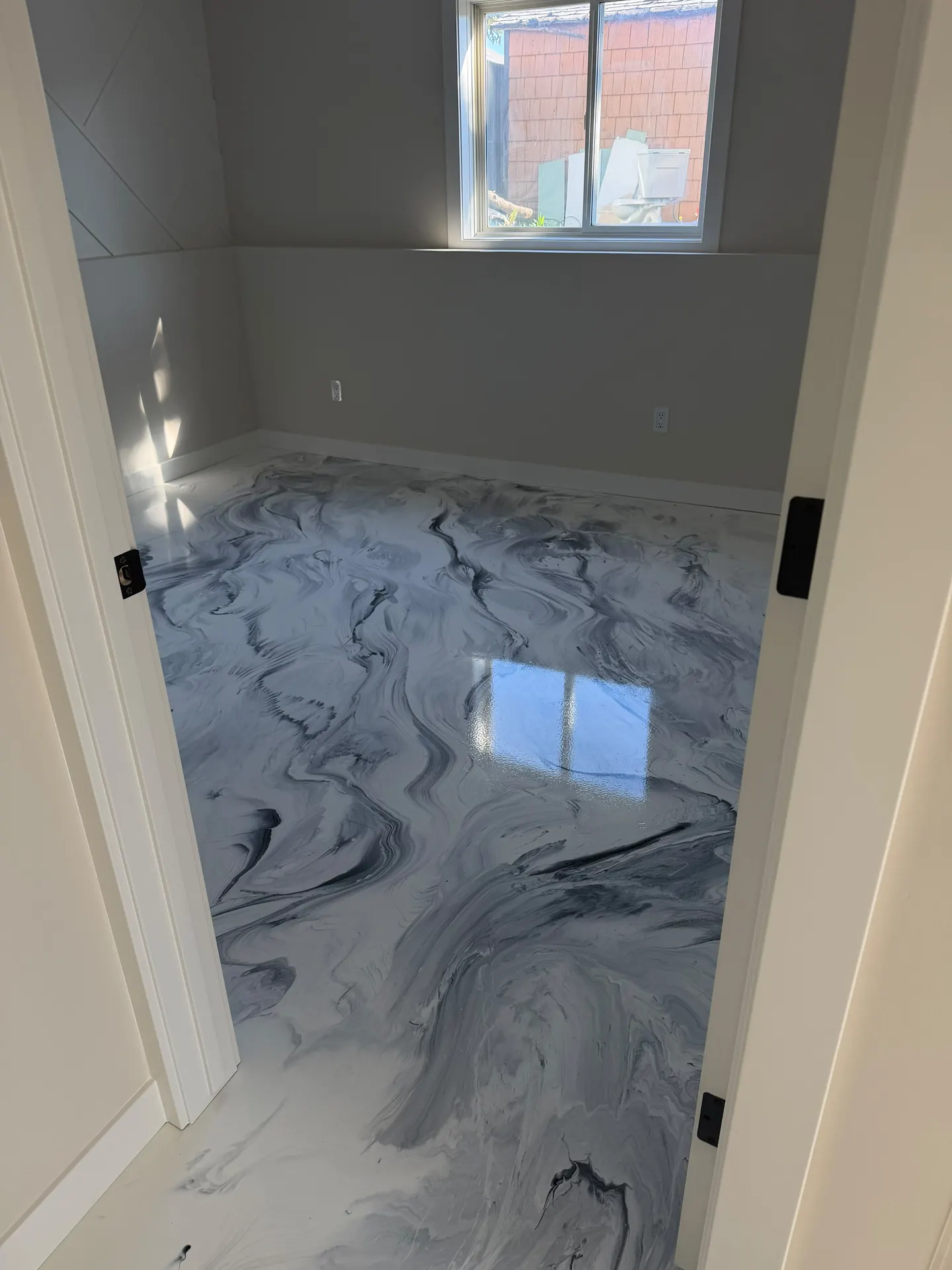
Metallic epoxy floors in Calgary are a premium finish that turns concrete into something that looks like polished marble, liquid metal or moving water. Metallic pigments are mixed into a clear epoxy and worked by hand while the resin is still wet, so the light catches the movement in the floor. No two are the same, which is exactly why homeowners choose them for basements, bars, showrooms and statement spaces.
Here is how a metallic floor is built, where it works best, and what to know before you choose one.
How a Metallic Epoxy Floor Is Made
- Grind and repair: the slab is diamond ground and cracks are filled. Metallic floors show everything, so the prep has to be smooth and flat.
- Prime: a primer coat seals the concrete and locks down dust so it cannot rise into the finish.
- Base coat: a tinted base sets the background colour, usually black, white, grey or a deep tone that makes the metallic pop.
- Metallic coat: the metallic epoxy is poured and worked with rollers, trowels, brushes or solvent sprays to create veining, waves or cells.
- Topcoat: a clear topcoat adds depth, gloss and protection. Polyaspartic or urethane is used where UV or scratch resistance matters.
Popular Looks
- White marble: white and silver with grey veining. Bright and clean in basements and kitchens.
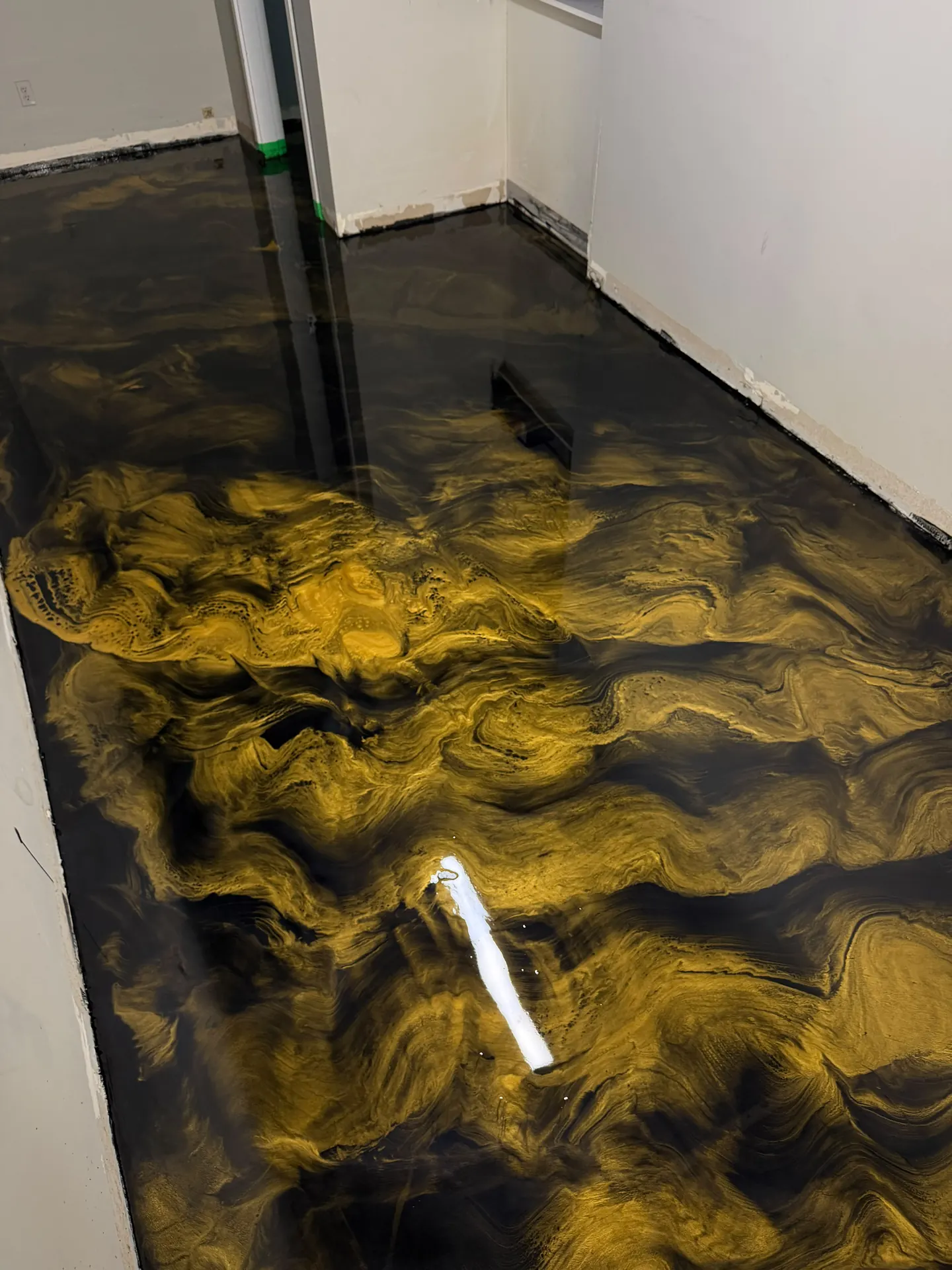
- Black and gold: deep black with gold movement. Common in bathrooms, bars and home theatres.
- Ocean and lava flows: blues, teals or coppers with large sweeping waves.
- Industrial silver: charcoal and pewter for garages and showrooms.
You can see a white marble and a black and gold floor we installed in our job gallery.
Where Metallic Floors Work Best
Metallic epoxy shines indoors where the floor is a design feature: finished basements, rec rooms, home gyms, bathrooms, retail showrooms, salons and restaurants. It can go in a garage, but a working garage with grit and road salt will show wear faster on a high-gloss finish. For garages, most homeowners are happier with a flake or quartz floor.
Pros and Cons
Pros
- A seamless, one-of-a-kind finish.
- Easy to clean with no grout lines.
- Bright, reflective surface that makes a room feel bigger.
- Can be customised to match cabinetry, hardware or brand colours.
Cons
- Gloss finishes can be slippery when wet. A slip-resistant additive in the topcoat helps.
- Shows scratches more than a flake floor in high-grit areas.
- Costs more than solid colour or flake because it is hand-worked and takes more time.
- The final pattern cannot be predicted exactly. That is part of the appeal, but it is not a printed tile.
How to Care for a Metallic Floor
- Dust mop daily in busy areas. Grit is what dulls a gloss floor.
- Wash with warm water and a pH-neutral cleaner.
- Use felt pads under furniture legs.
- Use mats at entry doors.
Metallic in Basements: What to Plan For
Basements are the most common place for metallic floors in Calgary homes. Before you commit, plan for three things. First, moisture: a basement slab needs to be tested, and a moisture-tolerant primer may be needed to protect the bond. Second, transitions: think about how the floor meets stairs, carpet or tile, and whether you want the coating to run up a short cove base. Third, lighting: metallic floors change with light, so pot lights and natural light from windows will make the movement show differently throughout the day.
Choosing Colours
Pick a base colour first, then one or two metallic accents. Dark bases with light or gold metallics give the most contrast and drama. Light bases with silver or grey give a softer marble look. Bring a cabinet door, a tile sample or a photo of the room and we will build the colour plan around it.
How Long Does a Metallic Floor Take?
Most metallic floors take a few days: prep and repair, primer, base coat, the metallic pour, then the topcoat. The metallic pour itself happens in one session so the pattern stays continuous. Plan to keep the room empty and dust free during that time, and follow the cure schedule before moving furniture back in.
Metallic vs Other Decorative Floors
Homeowners often compare metallic epoxy with polished concrete, large-format tile and luxury vinyl plank. Polished concrete has a quieter, industrial look and depends heavily on the quality of the existing slab. Tile brings grout lines that need sealing and cleaning. Vinyl plank is warm and quick but can be damaged by standing water and heavy point loads. Metallic epoxy sits in a different place: a seamless, waterproof surface with a custom pattern nobody else has. If the floor is meant to be the feature of the room, metallic is the one people notice.
Can Metallic Go Over an Existing Floor?
Metallic epoxy needs a sound concrete slab. Carpet, vinyl, tile and old coatings are removed first, and the concrete is ground and repaired. In some cases a self-levelling underlayment is poured to flatten a rough or uneven slab before the metallic system goes on. We will check the substrate during the quote so there are no surprises.
Choosing an Installer
Metallic is the most skill-dependent system in the resin trade. Ask to see finished metallic floors the contractor installed, not stock photos. Ask how they control dust, bubbles and outgassing, and how they will protect the space during cure. The pour happens in one continuous session, so crew size and planning matter.
Want a metallic floor? Send photos of your space and a few colour ideas and we will send a fixed-price quote. See all our flooring systems or read the guide to epoxy flooring cost.
Free Quote
Get A Fixed-Price Quote In 24 Hours
Send a few photos and rough dimensions. Denzille replies with a written quote, with the prep and system spelled out.
Frequently Asked Questions
What is a metallic epoxy floor?
A metallic epoxy floor uses metallic pigments mixed into clear epoxy and worked by hand while wet. The result is a seamless floor that looks like marble, liquid metal or flowing water.
Is metallic epoxy slippery?
A high-gloss metallic floor can be slippery when wet. Adding a slip-resistant additive to the topcoat improves grip, especially in bathrooms and entries.
Is metallic epoxy good for a garage?
It can be used, but a working garage with grit and salt will show wear faster on a gloss finish. Flake or quartz floors are usually the better garage choice.
Why does metallic epoxy cost more?
Each metallic floor is hand-worked in one continuous pour. It needs smoother prep, more coats and more installer skill than solid colour or flake systems.